 Sell on Jumia


 Filter

 Brand

Psychology of money wealth habits
(1001 products found)




-

-
 Previous Page
- 1
- 2
- 3
- 1
- /26
-
Next Page
-
 Filter

Frequently Asked Questions About psychology of money wealth habits
How can I choose the right resources to master the psychology of money wealth habits?
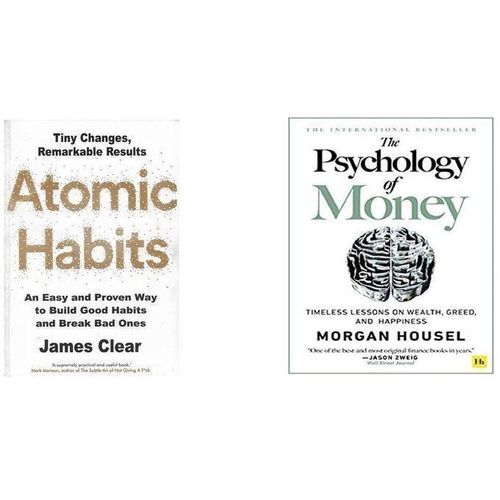
Clarify your goal and pick resources that align with the psychology of money wealth habits. Consider factors like author credibility, the depth of theory, and how well the material pairs psychology with actionable money habits. Look for bundles from jumia-books that combine The Psychology of Money with habit-forming guides such as Atomic Habits, and choose formats that fit your learning style. This approach helps you build a sustainable mindset and practical routines.
What is the most complex attribute of the psychology of money wealth habits, and how does it work?
The most complex attribute is how cognitive biases and emotions drive decisions in the psychology of money wealth habits, and how tiny daily actions compound wealth over time. Behavioral economics helps explain biases like loss aversion and overconfidence, while habit-formation science shows how to design cues, routines, and rewards. Study both by exploring resources from jumia-books that cover theory (The Psychology of Money) and practice (Atomic Habits) in one path. Use a structured method: identify a bias, replace it with a micro-habit, and track results to see real change.
Usage Scenario: How would a beginner reader vs. an experienced reader approach the psychology of money wealth habits?
Beginner readers should focus on foundational concepts and simple, repeatable habits when exploring the psychology of money wealth habits. Experienced readers can dive into deeper theories and case studies that connect money psychology with long-term wealth-building. For a beginner, pairing The Psychology of Money with Atomic Habits offers mindset and practical routines; an experienced reader might blend Rich Dad Poor Dad or Ikigai with the psychology title to expand purpose and strategies.
Maintenance/Compatibility: How can I maintain progress and ensure my reading fits my life while studying the psychology of money wealth habits?
Maintain progress by building a regular reading-and-application routine around the psychology of money wealth habits. Set a realistic schedule, apply micro-habits from Atomic Habits, and journal insights to reinforce learning. Choose formats offered by jumia-books that suit your lifestyle (print, ebook, or audio) and ensure the content aligns with your personal wealth goals.
What should I look for in books and bundles from jumia-books to ensure lasting value on the psychology of money wealth habits?
Look for credibility and long-term value in resources about the psychology of money wealth habits. Check author expertise (Morgan Housel, James Clear, Robert Kiyosaki), evidence-backed concepts, and whether the material integrates psychology with practical wealth-building steps. Opt for bundles from jumia-books that mix The Psychology of Money with habit-focused titles and wealth-management classics to reinforce learning over time.
 back to top